
Our Services

-
Registered nurse, sometimes called RNs play a significant role in home heath care, and provide treatment to patients suffering from various medical conditions. In most cases, they serve as Case Managers and are primarily responsible for coordination of care amongst the various disciplines, and serve as the liaison between the physician and patient/family members. They educate patients and their families on disease prevention, post-hospital/nursing home treatment, and try to prevent re-hospitalization. They perform diagnostic tests, analyze results, administer medications, operate medical equipment, and monitor patient recovery and progress. A RN conducts a comprehensive assessment and develops customized treatment plans that could include some or all the other disciplines of home health care.
A RN can assist in the following:
Hypertension Management
Diabetic Teaching and Management
Wound Care Treatment
Medication Compliance and Management
Cardiac Care
Tube Feeding
Ostomy Care
PICC Line Management
-
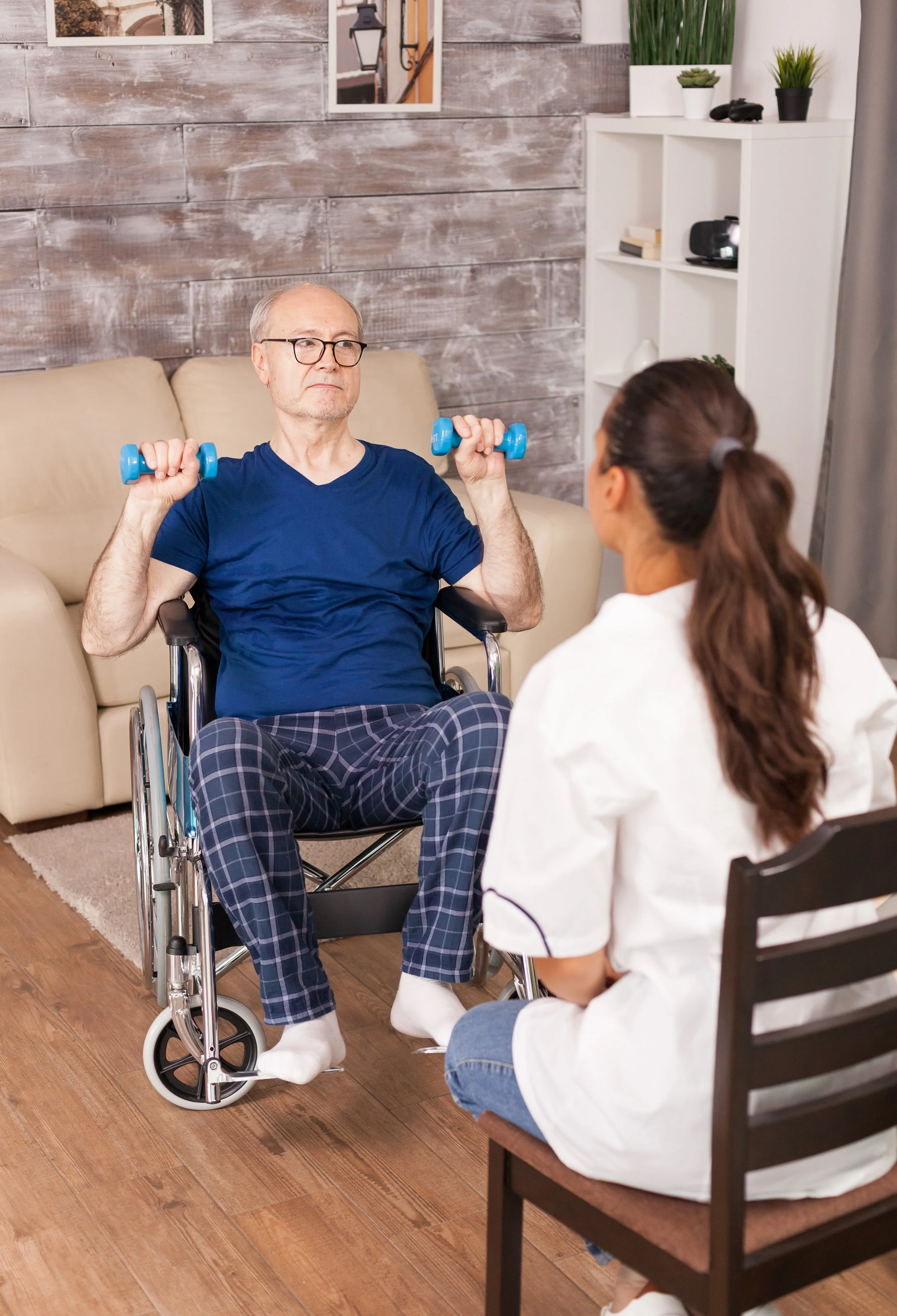
Physical Therapists, sometimes called PTs, help restore normal function after an injury or surgery, and provide strategies for further injury prevention. They are an important part of treatment and rehabilitation of patients with conditions such as fractures, sprains, bursitis, chronic medical conditions, injuries that limit movement, and after surgical procedures, especially after hip/knee replacements. Physical therapists examine patients, do a comprehensive assessment, and develop customized treatment plans.
Some of the goals of the therapist can be:
Reduce Pain
Increase Mobility and Flexibility
Gait Training and Posture Correction
Muscle Strengthening
Increase Range of Motion
Restoration to Optimum Functional Levels
Injury and Disability Prevention
-
Occupational Therapists, also known as OTs, helps individuals of all ages develop, regain, or maintain the skills needed for daily living, work, and meaningful activities. In a healthcare setting, OTs assess physical, cognitive, sensory, and emotional challenges, create personalized treatment plans, and provide therapy to improve independence and quality of life.
Common goals of occupational therapy include:
Improving independence in self-care and daily living skills
Enhancing fine and gross motor skills, strength, and coordination
Supporting cognitive functioning such as attention, memory, and problem-solving
Improving sensory processing and regulation
Promoting safe and effective participation at home, school, work, and in the community
Recommending adaptive equipment and environmental modifications to increase safety and accessibility
Supporting overall well-being and quality of life
-
Speech-Language Pathologist (Speech Therapist) helps individuals of all ages improve communication, language, speech, voice, and swallowing skills. Through evaluation and individualized treatment plans, speech therapists address challenges that may impact a person’s ability to communicate effectively and safely participate in daily activities. Therapy may include direct skill-building, use of alternative or augmentative communication methods, and education for individuals and caregivers.
Common goals of speech therapy include:
Improving speech clarity and intelligibility
Enhancing expressive and receptive language skills
Supporting social communication and pragmatic language skills
Developing alternative or augmentative communication (AAC) strategies when needed
Improving voice quality, pitch, and vocal endurance
Addressing fluency challenges such as stuttering
Improving feeding and swallowing safety and efficiency
Supporting confidence and effective communication in daily life
-
Home Health Aides are licensed Certified Nursing Assistant professionals that assist the patient in the activities of daily living and provide basic routine care; such as assistance in eating, bathing, brushing teeth, giving medicine, changing dressing, checking a patient's temperature and pulse rate.
-
A Licensed Clinical Social Worker (LCSW) along with helping people solve and cope with problems in their daily lives, also assist people with mental, behavioral, and emotional issues. A LCSW will assess a clients history, background, evaluate strengths and weaknesses, and develop a treatment plan by coordinating with the client, physician, and other health care professionals.